
Industry Insights: Future Trends in Rugged Mobile Technology for Hazardous Environments
In today’s industrial world, technology is no longer just about speed or performance—it’s about survival, safety, and sustainability. For those working in oil and gas, mining, chemicals, manufacturing, and logistics, communication and data access must happen under the most challenging conditions. In such environments, rugged mobile technology has become more than a convenience—it’s a lifeline.
The demand for intrinsically safe smartphones, rugged tablets, and explosion-proof communication devices is rising fast. Companies across the globe are looking for solutions that combine safety certification, durability, and intelligent connectivity. Brands like Conquest are leading this evolution by redefining what mobile performance looks like in hazardous industrial zones.
This article explores the future trends shaping rugged mobile technology and how these innovations are transforming communication and safety in hazardous environments.
1. The Rising Need for Rugged Mobile Technology
Industrial operations are evolving. The digital transformation of sectors such as oil and gas, chemical processing, and logistics requires real-time data, instant communication, and mobility that standard devices simply can’t handle.
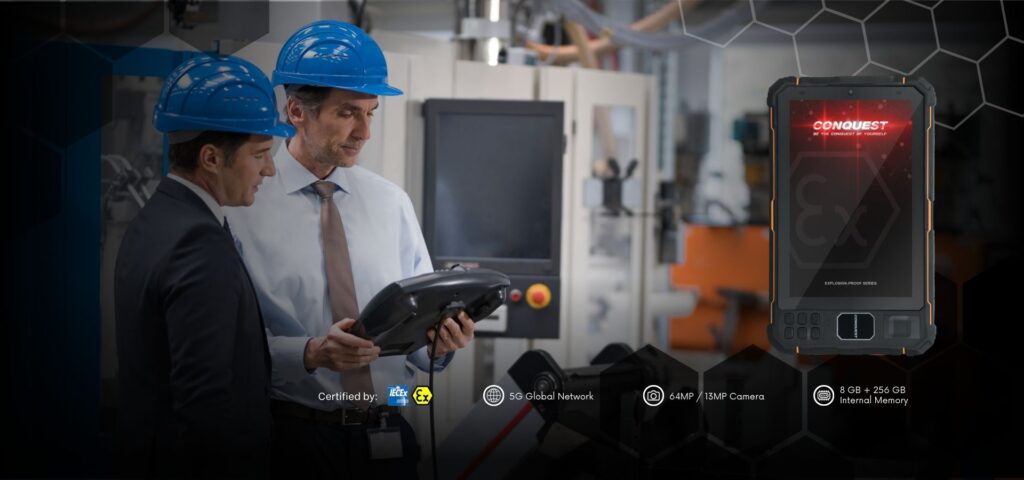
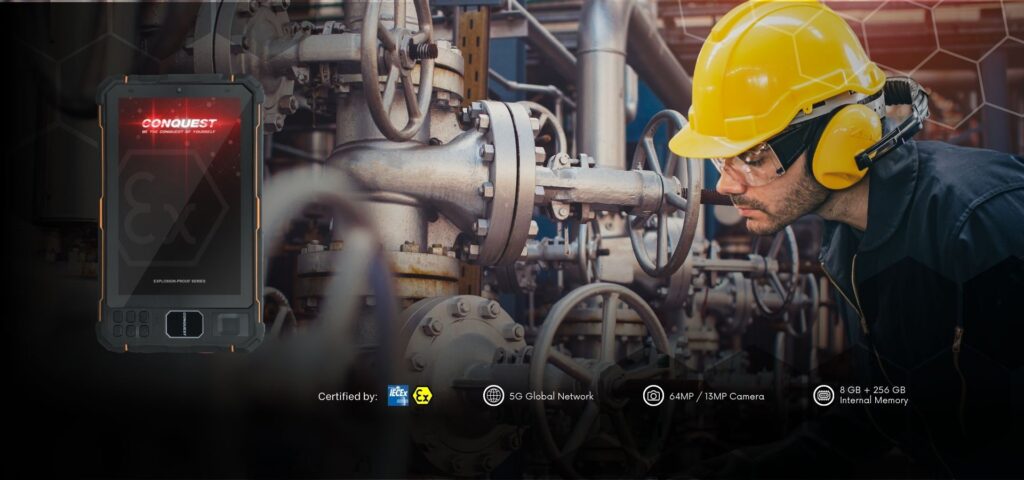
Rugged mobile devices—engineered to withstand dust, vibration, impact, and extreme temperatures—are the backbone of this transformation. Beyond physical toughness, they are now designed for explosive atmospheres with ATEX and IECEx certifications, ensuring safe operation even in volatile zones.
For instance, frontline workers on offshore rigs or inside refineries need mobile devices that don’t just work—they must ensure nothing goes wrong. In those moments, safety-certified devices like Conquest EX101 or EX201 provide both protection and performance.
2. Safety Certifications: The New Gold Standard
When working in potentially explosive atmospheres, safety is non-negotiable. The terms “intrinsically safe”, ATEX, and IECEx have become fundamental to industrial-grade mobility.
- ATEX Certification (from the EU) ensures a device is safe to use in explosive gas and dust environments.
- IECEx Certification provides global assurance that devices meet international safety standards.
Modern rugged smartphones are now being designed around these certifications rather than treating them as afterthoughts. This shift marks a significant trend—safety-first innovation.
Conquest’s intrinsically safe smartphones are perfect examples. Their devices undergo strict testing, combining high performance with sealed enclosures, anti-static materials, and precision engineering that prevent sparks or heat emissions.
In the coming years, we’ll see more manufacturers adopting these certification-first design philosophies, ensuring that rugged mobile devices not only perform but protect.
3. Connectivity and 5G Integration in Hazardous Zones
Connectivity has always been a challenge in remote or industrial areas. But that’s changing fast. The rollout of 5G technology is a turning point for hazardous industries.
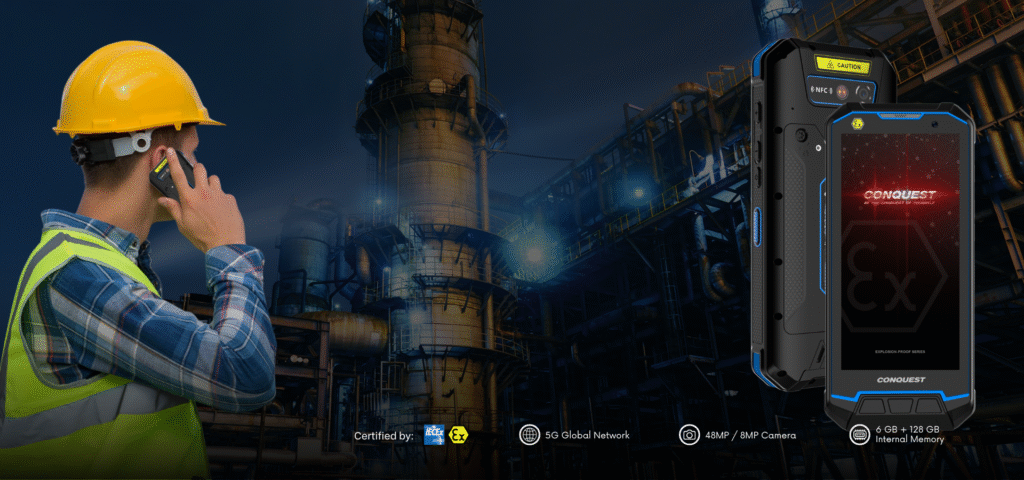
Rugged smartphones like the Conquest EX201 already feature 5G capabilities, allowing real-time video streaming, remote inspections, and instant data transmission even from remote oilfields or deep industrial facilities.
The future trend lies in integrated 5G and edge computing, where rugged devices act as data hubs, analyzing information on-site rather than relying on distant servers. This not only speeds up response times but also enhances safety through faster decision-making.
As industries continue to embrace Industry 4.0, rugged devices will become the essential tools that bridge human expertise with digital intelligence.
4. AI and Predictive Maintenance Integration
Artificial Intelligence (AI) is entering the rugged mobile technology space faster than expected. Future rugged devices will use AI-driven sensors to predict maintenance needs, monitor worker health, and detect environmental hazards in real time.
Imagine a smartphone that alerts a worker when gas levels rise beyond safe limits, or a tablet that automatically reports overheating equipment before failure occurs.
Conquest’s innovation culture and focus on bespoke engineering are paving the way for such intelligent solutions. As AI capabilities expand, rugged devices will move from being communication tools to being intelligent safety companions in the field.
5. Enhanced Durability with Sustainable Design
Another defining trend in rugged mobile technology is the balance between durability and sustainability. While these devices are built to last, manufacturers are now exploring eco-friendly materials, recyclable components, and modular designs to extend device life and reduce waste.
This growing focus also highlights the Environmental Impact of Industrial Mobile Devices: What Companies Should Know. In the past, rugged devices were judged only by their toughness—but in 2025 and beyond, businesses are expected to evaluate how their equipment affects the planet. From the sourcing of raw materials to end-of-life recycling, every step matters.
By implementing modular parts, companies can replace or upgrade components such as batteries, cameras, or screens without discarding the entire device. This not only reduces environmental impact but also lowers the total cost of ownership—something industries appreciate when managing thousands of field devices.
Forward-thinking brands like Conquest are leading this sustainable shift. Their commitment to quality and longevity ensures that each rugged smartphone not only performs under pressure but also contributes to a more responsible and environmentally conscious industrial ecosystem.
6. Customization: From One-Size-Fits-All to Industry-Specific Solutions
Every industrial environment is unique. The needs of an oil platform differ from those of a logistics warehouse or a chemical plant. The future of rugged mobile technology lies in customization.
Instead of generic models, companies are now demanding bespoke devices—designed with specific sensors, features, and software that match their operational challenges.
Conquest’s “Defying Uniformity” philosophy addresses exactly this need. Their tailored smartphone solutions allow enterprises to integrate specialized applications, modify external designs, or add hardware modules such as thermal cameras, gas detectors, or high-lumen flashlights.
As industrial digitalization advances, custom-fit rugged solutions will be a key differentiator for manufacturers and a value multiplier for end-users.
7. Cybersecurity in Rugged Devices
With more connectivity comes more responsibility. Cybersecurity is now as critical as physical protection. Industrial devices connected to secure networks must ensure data integrity, encrypted communication, and secure authentication to prevent breaches.
Future rugged smartphones will feature hardware-level security, AI-based intrusion detection, and remote management systems that protect both device and network.
For hazardous industries handling sensitive data—from production metrics to safety logs—secure mobility is no longer optional. It’s part of the operational backbone.
Conquest’s focus on secure communication systems and enterprise-grade support positions it well for this new frontier in digital safety.
8. The Convergence of IoT, AR, and Rugged Mobility
The integration of Internet of Things (IoT) and Augmented Reality (AR) is revolutionizing how field teams operate in hazardous and industrial settings. Rugged smartphones equipped with IoT sensors can track asset conditions in real time, while AR interfaces allow technicians to visualize complex data overlays directly on-site.
This convergence improves operational efficiency, reduces downtime, and enhances worker safety. Imagine using a rugged smartphone to view live machinery data, detect leaks, or inspect pipelines—without direct contact or manual recording. These capabilities are fast becoming essential for industries that rely on precision and safety.
In line with these innovations, the Top Rugged Smartphone Models for Industrial Use in 2025 will go far beyond physical toughness. They will feature built-in IoT compatibility, AI-driven diagnostics, and AR-enabled guidance systems that empower workers to act swiftly and safely.Conquest is already advancing toward this vision with its ATEX and IEC
Ex-certified smartphones that blend rugged reliability with digital intelligence. By uniting IoT and AR technologies with intrinsically safe hardware, Conquest enables enterprises to move toward a smarter, more connected, and safer future in industrial mobility.
9. The Role of Rugged Devices in Remote Work and Training
Post-pandemic industrial operations have accelerated remote monitoring, virtual inspections, and digital training. Rugged mobile devices are enabling this transition by providing secure, high-performance tools that support remote collaboration.
Whether streaming high-definition video from a refinery or running augmented reality training sessions, rugged devices ensure uninterrupted communication even in zones where traditional networks fail.
The trend toward connected remote operations will only grow stronger as industries pursue efficiency, sustainability, and safety simultaneously.
10. The Future Landscape: Smart, Safe, and Connected
The future of rugged mobile technology for hazardous environments is clear—it’s smart, safe, and connected.
Companies like Conquest are already embodying these values through their ATEX and IECEx-certified smartphones that combine toughness, intelligence, and reliability.
As industries continue to evolve, these trends will shape how frontline workers communicate, how data drives safety, and how innovation sustains progress.
The era of rugged mobile devices as static hardware is over. What lies ahead are intelligent, integrated, and intrinsically safe ecosystems—engineered to perform where it matters most.
Conclusion: Shaping a Safer Future with Conquest
As industries step into a more connected, data-driven, and safety-conscious era, rugged mobile technology stands at the center of progress. The next decade will belong to companies that prioritize safety, innovation, and adaptability.
Conquest continues to redefine this space with its ATEX & IECEx-certified intrinsically safe smartphones, engineered for the toughest industrial challenges. From oil rigs to logistics hubs, Conquest’s devices deliver unmatched safety, performance, and reliability.
If your enterprise operates in hazardous environments, it’s time to elevate your communication and operational safety.
Empower your workforce. Enhance your safety standards. Transform your operations with Conquest.
Visit Conquest to explore how Conquest’s intrinsically safe rugged smartphones can redefine safety and performance for your industrial future.
Avoid common pitfalls with IECEx-approved devices to ensure safety and compliance in hazardous environments. Learn about proper device selection, maintenance, and usage in 5 Common Mistakes to Avoid with IECEx-Approved Devices.
FAQs: Rugged Mobile Technology in Hazardous Environments
- What makes a mobile device “intrinsically safe”?
An intrinsically safe device is designed to prevent ignition of flammable gases, dust, or vapors by controlling electrical and thermal energy, making it safe for hazardous zones. - What are ATEX and IECEx certifications?
ATEX is the European certification for equipment used in explosive environments, while IECEx is the international equivalent. Both ensure a device’s safety and compliance with strict standards. - Why are rugged smartphones essential in industries like oil and gas?
They provide reliable, explosion-proof communication tools that withstand harsh conditions, ensuring worker safety and uninterrupted operations. - How does 5G improve industrial safety?
5G enables faster data transfer and real-time monitoring, allowing instant alerts and remote inspections that enhance safety and decision-making. - Can rugged mobile devices support custom applications?
Yes. Modern rugged smartphones, like Conquest’s, support custom enterprise software and hardware modules tailored to industry-specific needs. - What are the benefits of AI integration in rugged devices?
AI enables predictive maintenance, hazard detection, and intelligent automation, reducing downtime and enhancing field safety. - Are rugged devices environmentally sustainable?
New-generation rugged devices use durable, recyclable materials and modular designs to extend lifespan and reduce environmental waste. - How can I choose the right rugged smartphone for hazardous work?
Select a device with ATEX/IECEx certification, durable build quality, and support for your operational software. Conquest offers tailored solutions for every industry requirement.
More Interesting Posts
How Conquest EX202 Enhances Operational Efficiency with Built-In Tools
Enhancing Worker Safety with Conquest EX201’s Satellite Communication
Explosion Proof Smartphones in Malaysia for Petrochemical Industry