
Intrinsically Safe Smartphones in Thailand for Chemical Plants
Enhancing Safety and Communication in Hazardous Industrial Environments
In Thailand’s thriving industrial landscape, chemical manufacturing plays a critical role in powering growth and innovation. From petrochemical complexes in Rayong to industrial zones in Chonburi, the sector contributes significantly to the nation’s economy. Yet, these environments are often classified as hazardous areas, where the risk of explosion due to flammable gases, vapors, or dust is ever-present.
In such conditions, the use of regular electronic devices can be extremely dangerous. This is where intrinsically safe smartphones step in—offering a perfect balance of communication, safety, and productivity for frontline workers. These rugged, explosion-proof smartphones ensure operations continue smoothly without compromising worker safety.
This article explores why intrinsically safe smartphones are essential for chemical plants in Thailand, how they work, the certifications that matter, and why leading brands like Conquest are redefining industrial mobility.
What Does “Intrinsically Safe” Mean?
“Intrinsically safe” (IS) is a technical term that refers to devices designed to prevent ignition in hazardous environments. In simple terms, intrinsically safe smartphones are engineered to limit electrical and thermal energy, ensuring they cannot cause sparks or heat that could ignite flammable gases or vapors.
These devices are rigorously tested and certified under international safety standards such as ATEX (Europe) and IECEx (Global). This certification means they are suitable for use in environments like chemical plants, oil refineries, and gas facilities—where safety is a non-negotiable requirement.
Why Chemical Plants in Thailand Need Intrinsically Safe Smartphones
Thailand’s chemical industry operates in zones where explosive gases and dust particles are common. Every section—from production lines and mixing areas to storage facilities—presents potential ignition risks. Using regular smartphones in these environments can lead to catastrophic accidents.
Here’s why intrinsically safe smartphones are critical for Thai chemical facilities:
1. Safety Compliance with ATEX and IECEx Standards
Thailand’s industrial safety regulations increasingly align with global standards. Using ATEX and IECEx-certified smartphones ensures compliance with both local and international safety norms, reducing liability risks.
2. Enhanced Worker Communication
Efficient communication is vital in large plants. Intrinsically safe smartphones allow real-time coordination between field engineers, safety officers, and control rooms without endangering the environment.
3. Data Collection and Digital Transformation
Thailand’s chemical plants are moving towards Industry 4.0. IS smartphones enable workers to use mobile apps for inspection, maintenance, and monitoring—bridging the gap between safety and digitalization.
4. Durability in Harsh Conditions
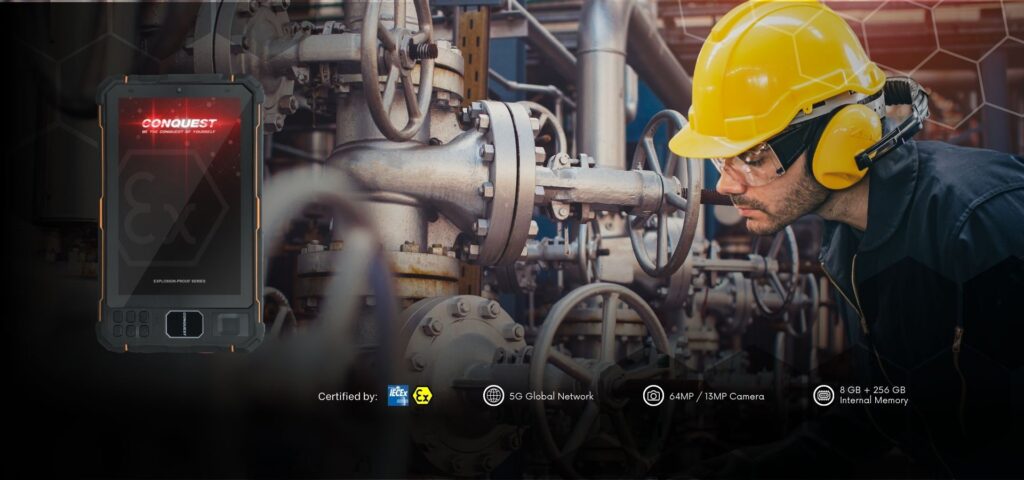
Chemical plants expose devices to extreme temperatures, moisture, and corrosive substances. Rugged smartphones, like Conquest EX-series devices, are built to withstand these challenges while maintaining stable performance.
5. Reduced Downtime and Maintenance Costs
Rugged IS smartphones are designed for long-term reliability. Unlike standard devices that fail easily under stress, these models minimize equipment downtime, leading to better productivity and lower operational costs.
How Intrinsically Safe Smartphones Work
These specialized smartphones are built using explosion-proof design principles. The internal components are shielded and optimized to prevent any electrical discharge that might trigger an ignition.
Key design elements include:
- Energy-limiting circuits that prevent sparks.
- Sealed housings that block dust and gas penetration.
- Reinforced screens and casings resistant to impact and extreme conditions.
- Temperature control mechanisms that prevent overheating.
The result is a smartphone that looks and functions like any modern device but can safely operate in Zone 1 and Zone 2 hazardous environments, where the presence of flammable gases or vapors is frequent or occasional.
When working with such specialized equipment, understanding 5 Common Mistakes to Avoid with IECEx-Approved Devices can make a crucial difference in maintaining both safety and device longevity. Ensuring proper usage, regular inspection, and adherence to certification standards keeps operations running securely and efficiently.
ATEX and IECEx Certifications Explained
ATEX Certification (EU Standard)
ATEX (from the French “Atmosphères Explosibles”) is a certification used in Europe to ensure equipment safety in explosive atmospheres. Devices are categorized based on the level of hazard exposure. For example:
- Zone 1: Area where explosive gas is likely to occur.
- Zone 2: Area where explosive gas is less likely but possible.
IECEx Certification (International Standard)
IECEx is a global standard recognized in Asia, including Thailand. It verifies that a device meets international safety benchmarks. An IECEx-certified smartphone guarantees compliance for use in international projects and multinational chemical operations.
When a device carries both ATEX and IECEx certifications, it ensures the highest level of trust and safety for any industrial setting.
The Role of Intrinsically Safe Smartphones in Chemical Plants
1. Real-Time Monitoring and Maintenance
Workers can record inspection data, take photos of equipment, or scan barcodes safely within hazardous zones. This boosts traceability and accountability across operations.
2. Safety Alerts and Incident Reporting
In emergencies, IS smartphones enable immediate reporting and communication with the safety team, reducing response time during incidents.
3. Seamless Integration with Industrial Systems
Modern intrinsically safe smartphones can integrate with SCADA systems, maintenance apps, and cloud-based dashboards—ensuring smarter and faster decision-making.
4. Reliable Connectivity
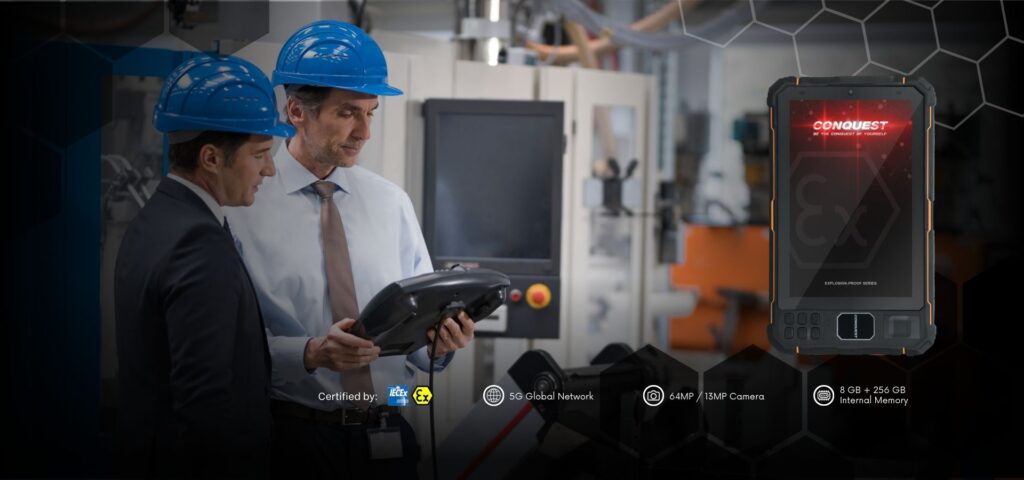
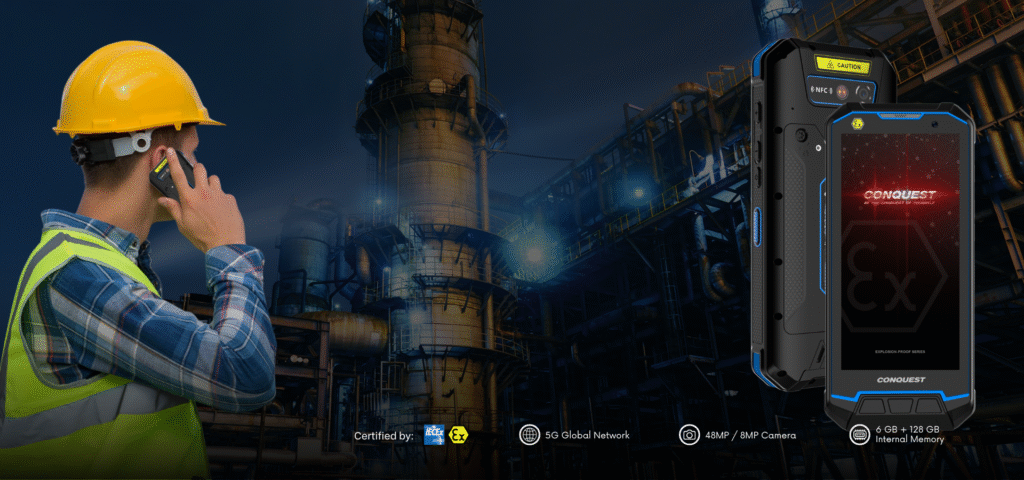
Devices like the Conquest EX201 and EX101 support 5G networks, Wi-Fi, and Bluetooth, ensuring uninterrupted connectivity for teams working across wide facilities.
5. Camera and Documentation Capabilities
High-resolution cameras allow workers to capture images or videos for inspection, documentation, or remote support—without leaving hazardous zones.
Thailand’s Growing Adoption of Intrinsically Safe Technology
Thailand’s industrial modernization has led to increased awareness of explosion-proof devices. Major industries such as PTT Group, SCG Chemicals, and Thai Oil are upgrading to digital tools that meet international safety standards.
As part of this digital transformation, intrinsically safe smartphones are becoming essential tools for chemical, oil & gas, and logistics sectors. Companies value them not just for safety compliance but also for improving workflow efficiency and data accuracy.
Moreover, as Thailand moves toward becoming ASEAN’s industrial innovation hub, the need for certified, high-performance devices like Conquest smartphones continues to grow. Understanding and following Hazardous Environment Regulations: Compliance Tips for Mobile Technology is crucial for plant operators and safety managers who want to ensure every digital tool used in hazardous zones meets strict international standards.
Why Choose Conquest Intrinsically Safe Smartphones
Conquest is a globally recognized brand dedicated to developing rugged, explosion-proof smartphones and tablets for hazardous industries. Designed with precision and certified under ATEX and IECEx standards, Conquest devices have become trusted solutions across oil, gas, and chemical facilities worldwide—including Southeast Asia.
Here’s why Conquest stands out in Thailand’s industrial market:
1. Certified for Hazardous Environments
Conquest smartphones meet ATEX and IECEx standards, ensuring full compliance with Thailand’s industrial safety requirements.
2. Rugged and Reliable Design
Built for extreme environments, Conquest devices withstand impact, dust, water, and chemicals. They are engineered to deliver uninterrupted performance even under pressure.
3. Powerful Performance
Models like the EX201 feature 5G connectivity, 8GB RAM, and up to 256GB storage, allowing seamless use of enterprise apps and digital tools.
4. Customization Options
Conquest offers bespoke solutions—tailored hardware or software configurations for specific industry needs, such as barcode scanning or push-to-talk (PTT) features.
5. Dedicated Support and Aftercare
With a customer-centric approach, Conquest provides 24/7 professional support, ensuring minimal downtime and swift assistance when needed.
6. Competitive Pricing and Long-Term Value
Despite premium engineering, Conquest offers exceptional value for money—a smart investment for organizations focused on safety and efficiency.
The Future of Safe Mobility in Thai Chemical Plants
The next generation of chemical plant operations in Thailand will rely heavily on smart, connected, and intrinsically safe technologies. With increased automation and mobile connectivity, ensuring explosion-proof communication tools becomes more critical than ever.
Brands like Conquest are not just manufacturing devices—they’re building safer, smarter ecosystems for hazardous industries. Whether used for inspection, maintenance, logistics, or emergency communication, intrinsically safe smartphones are transforming how Thailand’s industrial workforce operates.
As Thailand continues to invest in high-tech manufacturing and sustainable safety practices, adopting intrinsically safe smartphones will remain a key step toward achieving operational excellence and worker protection.
8 Frequently Asked Questions (FAQs)
1. What is an intrinsically safe smartphone?
An intrinsically safe smartphone is a device designed to prevent sparks, heat, or energy discharge that could ignite flammable gases or vapors in hazardous environments.
2. Are intrinsically safe phones mandatory in chemical plants?
Yes, in most hazardous areas, safety regulations require using explosion-proof or intrinsically safe devices to prevent ignition risks.
3. What certifications should I look for?
Look for ATEX and IECEx certifications. These international standards ensure the device is approved for use in explosive atmospheres.
4. Can Conquest smartphones be used in Thailand?
Absolutely. Conquest devices are globally certified and widely adopted in Thailand’s oil, gas, and chemical industries.
5. Are intrinsically safe smartphones durable?
Yes, they are built to withstand extreme environments, including high temperatures, dust, vibration, and moisture—making them ideal for heavy industrial use.
6. Do they support modern apps and connectivity?
Yes. Conquest smartphones feature Android OS, 4G/5G support, Wi-Fi, Bluetooth, and NFC for seamless integration with modern apps and enterprise systems.
7. What makes Conquest different from other brands?
Conquest offers custom-built, ATEX-certified smartphones that combine rugged durability with top-tier performance and personalized features.
8. How can I purchase Conquest intrinsically safe smartphones in Thailand?
You can contact Conquest’s sales consultants directly via Conquest for product details, demonstrations, or customized industrial solutions.
More Interesting Posts
How Conquest EX202 Enhances Operational Efficiency with Built-In Tools
Enhancing Worker Safety with Conquest EX201’s Satellite Communication
Explosion Proof Smartphones in Malaysia for Petrochemical Industry