
If you’re looking to understand what a temperature sensor is, how it works, and which type suits your needs best — you’re in the right place.
From industrial plants to everyday electronics, temperature sensors play a crucial role in maintaining safety, performance, and automation. Whether you’re designing a smart system or working in hazardous zones, selecting the right sensor is critical for reliable temperature monitoring. In this blog, we’ll explore the different types of temperature sensors, how they function, where they’re used, and how to choose the best one for your application — all with a focus on rugged environments.
Stay with us as we break down complex technical concepts into easy-to-understand insights, and introduce powerful industrial solutions, including sensor-ready rugged devices from Conquest Explosion Proof.
A temperature sensor is a device that detects thermal changes and converts them into signals readable by control systems, instruments, or digital platforms. These devices are widely used in industrial processes, consumer products, and scientific equipment for real-time temperature tracking.
Unlike traditional glass thermometers, a temperature sensor enables automatic monitoring and response — whether in a refinery, warehouse, smart home, or vehicle. It plays a vital role in maintaining safe operating conditions and optimizing performance.
Key Characteristics of a Temperature Sensor:
Temperature sensors can vary in accuracy, speed, range, and durability — making it essential to understand their types and applications before choosing one.
A temperature sensor operates by detecting changes in physical properties (like resistance or voltage) when the surrounding temperature changes. It then converts these changes into electrical signals, which can be interpreted by connected systems or devices.
Here’s how the main types function:
Each type is engineered to perform best in specific operating conditions — from delicate lab instruments to rugged industrial machinery.
For extreme conditions, ATEX phones are often paired with thermocouples for rugged environments.
Consider integrating with an intrinsically safe mobile phone for enhanced durability.
Each type of temperature sensor plays a distinct role in ensuring safe and reliable operations across a wide range of industries.
Temperature sensors are embedded into the infrastructure of nearly every industry. Here are some common real-world applications:
Each application places different demands on the temperature sensor, requiring engineers to choose based on accuracy, durability, and response speed.
When selecting a temperature sensor, consider the following key criteria:
Quick Comparison by Sensor Type:
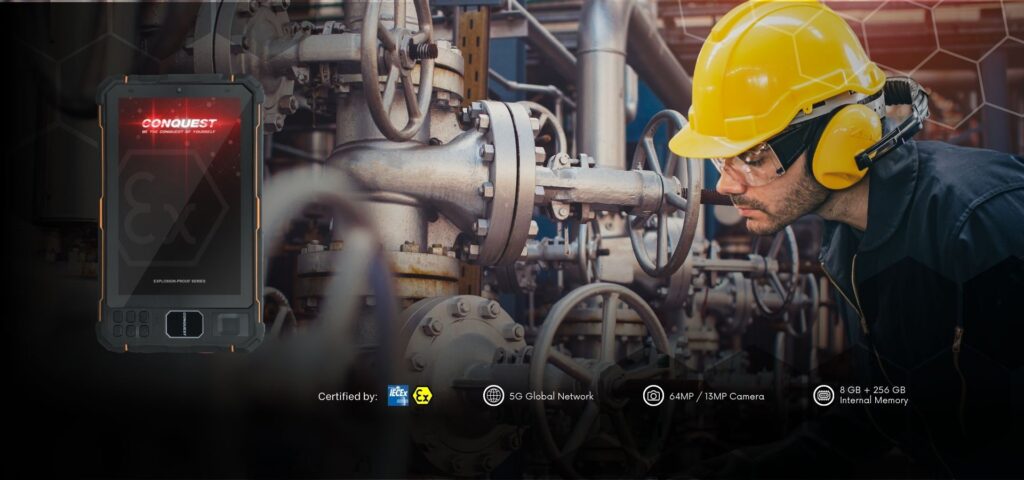
In many real-world industrial environments, temperature sensors are only as effective as the system they’re connected to. When working in extreme or hazardous zones — such as oil refineries, mining shafts, or chemical plants — traditional smartphones and handheld devices fail to withstand the elements.
This is where rugged mobile devices step in.
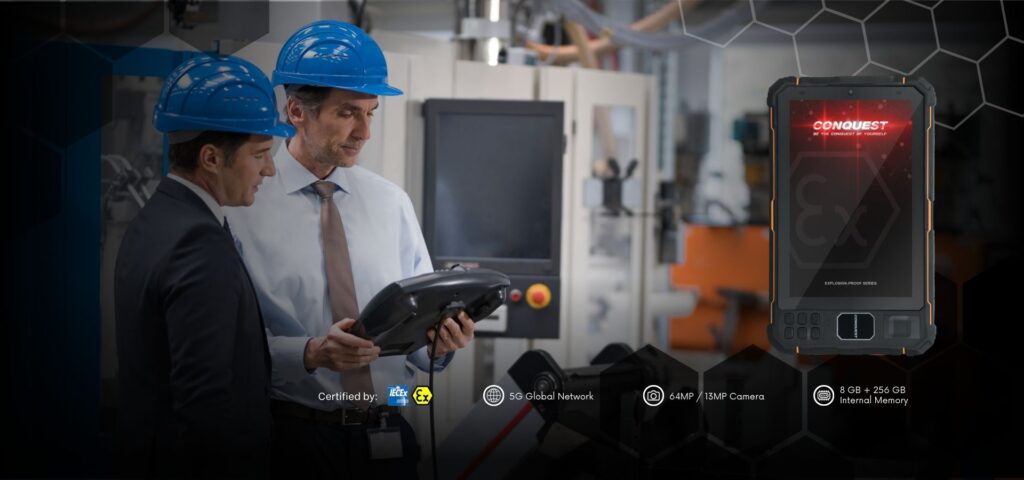
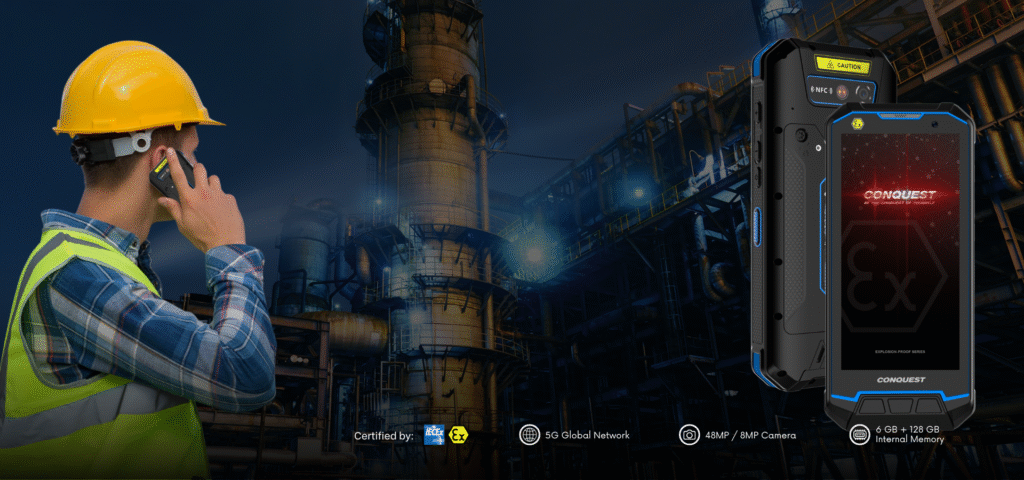
Brands like Conquest offer ATEX-certified rugged smartphones built specifically for field engineers, inspectors, and operators who rely on sensor-driven data to make decisions in real time.
Conquest smartphones aren’t just tough — they’re intelligent tools designed for demanding industrial tasks. If you’re using a temperature sensor in a hazardous setting, you need a mobile device that matches your sensor’s reliability and durability.
Conquest Devices Offer:
Looking for a device that can withstand your most extreme work environments while supporting smart temperature monitoring solutions? Explore Conquest’s ATEX-certified smartphones — engineered for safety, built for performance.
From medical labs to manufacturing plants and underground tunnels, temperature sensors are an integral part of modern operations. Choosing the right one ensures safe, precise, and efficient processes. Whether you need high accuracy, wide range, or rugged compatibility, there is a sensor designed for your application.
But your job doesn’t end with the sensor. It’s just as important to have the right mobile technology to gather and manage that data effectively in the field.
That’s why rugged mobile solutions from Conquest play such a critical role — offering reliability where it matters most.
A temperature sensor is used to measure heat or thermal energy and convert it into readable signals for monitoring and control across industries.
The main types include RTDs, thermistors, thermocouples, semiconductor sensors, and specialized OEM/vibrating wire sensors.
Thermocouples are best for high-temperature applications due to their broad range and durability.
Use rugged smartphones or tablets with sensor-compatible ports, Bluetooth, or dedicated industrial software platforms.
Yes, but you must use certified sensors and ATEX/IECEx-approved devices like those from Conquest.
Yes. RTDs offer superior long-term accuracy and stability, while thermistors respond faster but may drift over time.
In consumer electronics, like smartphones, gaming consoles, and wearables, where compact size and low power are important.
Standard devices can fail in harsh environments. Rugged phones like those from Conquest are designed to operate safely with sensors in extreme conditions.
Conquest
replies in a minute
Any question related to conquest product
WhatsApp Us
🟢 Online | Privacy policy
WhatsApp us